
95Cr18 : How Chemical-Composition Tuning Optimizes Performance of High-Carbon Martensitic Stainless Steel
Within high-end equipment manufacturing, precision instrumentation and special-tool sectors, 95Cr18 (9Cr18, 95Х18, S44090) steel serves as a critical material thanks to its desirable combination of hardness, wear resistance and corrosion performance. Classified as a high-carbon high-chromium martensitic stainless steel, this grade’s in-service performance under extreme operating conditions is directly governed by tight chemical-composition control.
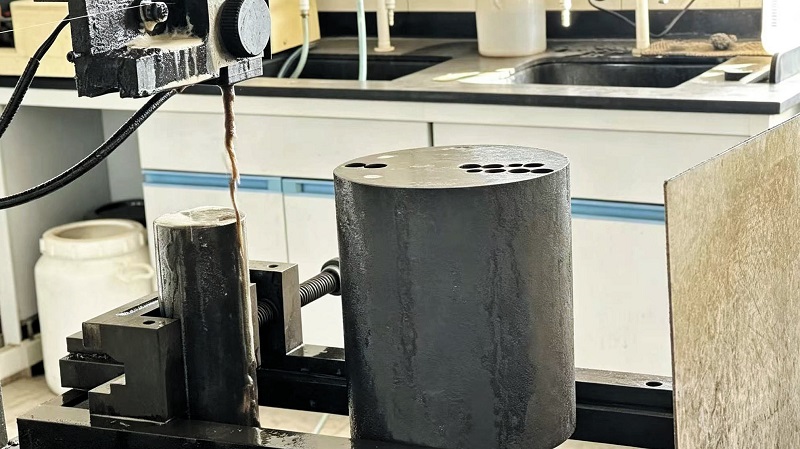
– Carbon-Chromium Balance: The Core Trade-off Between Wear Resistance and Corrosion Resistance
The performance behaviour of 95Cr18 steel originates from the precisely tuned ratio of carbon (C: 0.90-1.00 %) and chromium (Cr: 17.0-19.0 %). Acting as the primary hardening element, carbon forms high-carbon martensite and chromium carbides (Cr₂₃C₆) to deliver outstanding wear-resistant properties. After quenching, hardness reaches 58-62 HRC, well suited for high-load operating conditions such as cutting tools and bearing components.
Nevertheless, every 0.05 % rise in carbon content increases the risk of intergranular corrosion. Excess carbon combines with chromium to precipitate carbides, generating chromium-depleted zones along grain boundaries. This metallurgical feature raises susceptibility to corrosion failure under humid or acidic service environments.
Chromium serves as the key element for corrosion protection by building dense Cr₂O₃ passive films that form a protective barrier in oxidizing media including atmospheric exposure and nitric-acid service. Pitting-corrosion resistance improves by over 20 % once chromium content exceeds 18 %. However, excessive chromium above 19 % promotes the precipitation of sigma-phase (σ) intermetallic compounds and triggers a sharp drop in material toughness.
– Impurity-Element Management: ppm-Level Control for Consistent Material Quality
Within the chemical-composition system of 95Cr18 steel, silicon (Si ≤ 0.80 %) and manganese (Mn ≤ 0.80 %) act as auxiliary alloying elements. They improve base-material performance via deoxidation and solid-solution strengthening. By contrast, sulphur (S ≤ 0.030 %) and phosphorus (P ≤ 0.040 %) represent harmful trace impurities requiring strict limitation.
Test data indicates that every 0.01 % excess in sulphur content raises hot-brittlement risk by 40 %. When phosphorus content exceeds 0.035 %, low-temperature fracture toughness drops by 25 %.
Modern advanced melting technologies enable dual control of sulphur and phosphorus at ≤ 0.020 %. Combined with electroslag remelting (ESR), the cleanliness of molten steel improves by 60 %, which greatly reduces premature-failure risks for high-end bearing components.
– Composition-Process Synergy: New Opportunities for Custom-Tailored Performance
Precise chemical-composition control must work in synergy with heat-treatment procedures to achieve target material properties. To mitigate quenching-cracking risks caused by high-carbon content, one military-grade component manufacturer adopts a combined process of step-quenching plus cryogenic treatment.
For steel with 0.98 % carbon content, the material is first held at 1050 ℃ to promote carbide dissolution, followed by step cooling: holding at 550 ℃ for 30 minutes before oil quenching. This procedure reduces quenching stress by 40 % and cuts cracking rate from 8 % to below 1 %.
Composition optimization unlocks further innovative possibilities for segmented application scenarios. For corrosion-resistant parts deployed in offshore engineering, carbon content is lowered to 0.90 %, chromium raised to 18.8 %, with trace molybdenum addition (0.5 %).
This adjustment delivers a 50 % improvement in seawater corrosion resistance compared with standard 95Cr18 grades. For high-speed cutting-tool applications, carbon is pushed to its upper limit of 1.00 %, chromium maintained at 17.5 %, with 0.3 % vanadium micro-alloying. The modified formulation brings 25 % higher wear resistance versus conventional grades and delivers notable gains in machining efficiency.
– Industry Outlook: Targeted Composition Design Drives High-End Manufacturing
As aerospace, medical-device and other sectors impose increasingly stringent requirements on material performance, composition tuning for 95Cr18 steel is shifting from trial-and-error empirical practice toward precision-driven design. Thermodynamic simulation software such as Thermo-Calc predicts carbide-precipitation behaviour.
Combined with big-data analytics to build composition-performance prediction models, manufacturers can boost composition-control accuracy down to the 0.01 % level, enabling a transition from general-grade to custom-engineered material solutions.
“The future development of 95Cr18 steel lies in balancing extreme performance and cost-efficiency,” notes an industry analyst. Once carbon-chromium ratio accuracy reaches ±0.02 % and impurity-element control enters the ppm range, this established alloy will unlock greater potential within high-end equipment manufacturing.
Leading material manufacturers have launched next-generation 95Cr18 composition-optimisation programmes. The development target is to retain hardness ≥ 58 HRC while reducing corrosion rates by more than 30 % within the intergranular-corrosion susceptible temperature window of 400-850 ℃. Such micro-level chemical-composition adjustment serves as a key enabler for high-end manufacturing upgrades.


