
Why 630 (17-4PH) Stands Out for High-Strength Corrosion Resistance in Offshore Projects
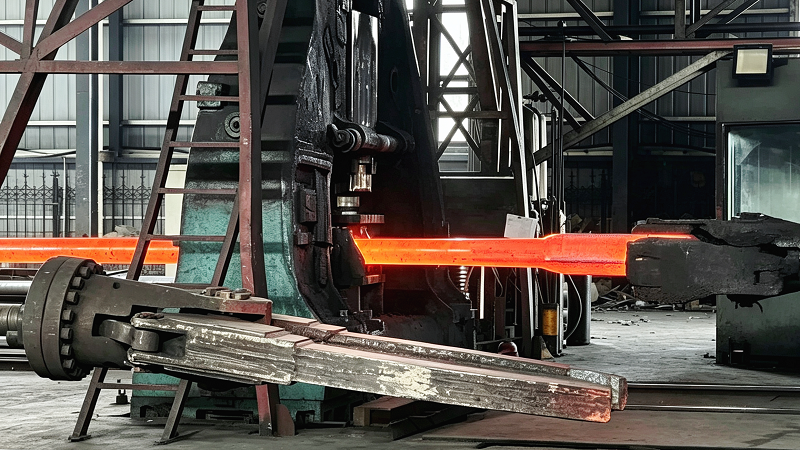
– Strict Material Requirements for Offshore Engineering and Performance-Matching of 630 Steel
Offshore operating environments bring severe service hazards: heavy salt-spray exposure, aggressive chloride-led corrosion, high static loading and repeated cyclic stress. These conditions demand engineering materials capable of high strength, chloride pitting resistance and robust resistance against fatigue fracture.
630 steel (UNS S17400, 17-4PH, SUS 630, 1.4542, X5CrNiCuNb16-4, X5CrNiCuNb17-4, 0Cr17Ni4Cu4Nb, 05Cr17Ni4Cu4Nb) serves as a viable material option for critical offshore components. It delivers tensile strength of 1000-1300 MPa, tunable hardness across HRC 30-45, and a pitting-resistance equivalent number (PREN) ≥ 20.
The 17 % chromium fraction establishes baseline corrosion resistance, while 4 % nickel improves bulk toughness. During age-hardening treatment, copper and niobium precipitate nano-scale strengthening phases such as Ni₃Cu and NbC. This metallurgical behaviour delivers a practical trade-off between strength, corrosion performance and machinability, making the alloy well-suited for corrosion-vulnerable offshore zones: splash zone, tidal zone and fully-submerged zone.
– Core Application Scenarios of 630 Steel in Offshore Engineering
-
Offshore Platform Structural Components
- Jacket and Leg Joint Nodes
In deep-sea platform jacket connection nodes, 630 steel is processed via solution treatment followed by aging at 550 ℃, achieving a controlled hardness of HRC 38-42 and a tensile strength of 1100 MPa. Compared with conventional 316L stainless steel under identical marine cyclic loading conditions, 630 steel delivers a 30 % longer fatigue lifespan and effectively resists alternating stress caused by typhoon-level extreme loads.
Field verification in high-chloride deep-sea environments shows that 630 steel jacket leg nodes maintain an ultra-low corrosion rate of 0.005 mm/a after 10 years of continuous service, far outperforming the API standard limit of 0.03 mm/a.
- Mooring-System Components
Mooring hardware such as chain connectors and fairleads requires extreme mechanical strength and long-term seawater corrosion resistance under breaking loads exceeding 5000 kN. After plasma nitriding surface treatment, 630 steel improves comprehensive wear and corrosion resistance by 50 % compared with untreated forged carbon steel.
Applied in deepwater mooring systems of Brazilian offshore oilfields, 630 steel components successfully replace traditional forged steel parts, extending routine maintenance intervals from 6 months to 2 years.
-
Critical Components for Offshore Equipment
- Pumps, Valves and Pressure Vessels
For high-pressure impellers in seawater desalination systems and process valves for corrosive media, 630 steel provides 20 % higher corrosion resistance than duplex 2205 steel when tested in 3.5 % NaCl solution, with a stable corrosion potential of +0.3 V vs SCE. The material supports precise EDM (Electrical Discharge Machining), enabling highly complex internal flow channel structures with tight tolerances.
In large-scale Middle Eastern desalination projects, 630 steel multistage centrifugal pump impellers extend operational service life from 8,000 hours (standard austenitic stainless steel) to 15,000 hours.
- Subsea Connectors and Sensor Supports
Deep-sea subsea production components, including electrical connector housings and sonar sensor brackets, withstand continuous 60 MPa hydrostatic pressure alongside persistent marine biofouling and saltwater corrosion.
Combining precision casting and laser cladding restoration technology, 630 steel achieves intricate internal cavity structures with a dimensional accuracy of ±0.05 mm. After PVD Ni-P alloy surface coating, the material resists marine organism adhesion 80 % more effectively than uncoated offshore stainless steel grades. These upgraded components deliver stable, long-term performance in deep-sea subsea operational environments.
-
Marine Renewable-Energy Applications
- Offshore Wind Flanges and Bolts
For critical tower flange connections on 10 MW+ offshore wind turbines, Grade 12.9 630 steel bolts demonstrate superior hydrogen embrittlement resistance compared with conventional structural alloy steel 42CrMo. After 5,000 hours of rigorous salt spray testing per ASTM B117 standards, no stress corrosion cracking or surface degradation occurs.
Practical application at UK North Sea wind farms proves that 630 steel flange assemblies reduce overall installation costs by 15 % and cut annual maintenance frequency by 40 %.
- Tidal Energy Equipment Impellers
Tidal turbine impellers operate under harsh conditions of continuous sediment erosion and saltwater corrosion. Coated with HVOF (High-Velocity Oxy-Fuel) sprayed WC-Co ceramic layers, 630 steel impellers achieve a total wear-corrosion service life of 80,000 hours.
Compared with ordinary stainless steel impellers under identical high-flow tidal environments, the optimized 630 steel solution delivers 5× longer service durability, perfectly suited for high-velocity, sediment-rich marine renewable energy scenarios.
– Future Trends
As offshore engineering expands toward deep-sea and polar regions, 630 steel applications will see deep integration with digital technologies.
Intelligent Condition Monitoring 630-steel structural components embedded with Fiber-Bragg-Grating (FBG) sensors enable real-time tracking of corrosion rates and stress variations. AI-driven algorithms predict remaining service life to support predictive-maintenance workflows.
Sustainable Manufacturing Low-carbon-potential nitriding processes cut energy consumption by 30 %. Laser-cladding remanufacturing for worn-out components delivers material recovery rates above 90 %. Both technologies align with the low-carbon development targets for offshore industries.
– Summary
Thanks to its well-balanced overall performance, 630 steel stands as a benchmark material combining high strength and corrosion resistance for offshore-engineering projects. Continuous advances in material processing will unlock broader application potential across cutting-edge sectors including polar ice-breaking vessels and deep-sea mining robots. This alloy delivers practical material solutions supporting sustainable development for global offshore industries.


