
Why 630 (17-4PH) Delivers Superior Spinneret-Plate Performance for High-End Fiber Production
630 steel (UNS S17400, 17-4PH, SUS 630, 1.4542, X5CrNiCuNb16-4, 0Cr17Ni4Cu4Nb, 05Cr15Ni5Cu4Nb) is a martensitic precipitation-hardening stainless steel. It delivers tensile strength ranging from 1000-1300 MPa, tunable hardness of HRC 30-45, and outstanding resistance to acid-and-alkali corrosion. Its alloy formulation with 17 % chromium and 4 % nickel provides superior erosion resistance over conventional stainless-steel grades such as 316L when exposed to molten polyester, polyamide and similar polymer melts.
Strength and toughness can be precisely tailored via solution-treatment plus age-hardening heat cycles. Low-temperature aging at 480 ℃ yields maximum hardness up to HRC 45, suited for high-load spinning operations. High-temperature aging carried out at 620 ℃ balances workability and dimensional stability to meet machining requirements for intricate orifice profiles.
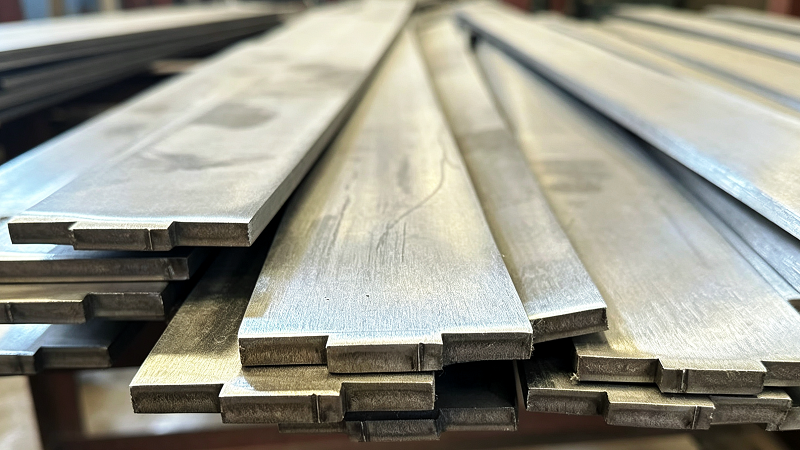
– High-Performance Materials for Precision Manufacturing
1. Precision Forging and Heat Treatment
High-temperature forging at 1050 ℃ refines grain structure. Spheroidizing annealing lowers hardness to HB ≤ 300 and creates favorable conditions for subsequent micro-scale machining. Rapid water quenching after solution-treatment generates a homogeneous austenitic matrix. During aging cycles, strengthening precipitates of Ni₃Cu and NbC precipitate out, bringing 40 % improvement in wear resistance.
2. Micro-Scale Machining Technology
Five-axis CNC machining, femtosecond-laser micro-hole forming (tolerance ±0.002 mm) and electrochemical polishing (inner-wall roughness Ra ≤ 0.1 μm) are deployed. These processes deliver precise control over spinneret-hole diameters ranging from 0.05-1.0 mm, meeting production requirements for ultra-fine fibers such as 1-5 μm melt-blown fibers.
3. Surface-Strengthening Treatments
Ion nitriding (hardness HV 1200) and PVD TiN coating boost anti-adhesion performance of spinneret orifices by 60 %. The treatments effectively reduce filament breakage triggered by polymer-melt retention. Service life for a single spinneret plate extends from 3 months for conventional materials to 8-12 months.
– Application Scenarios of 630 Steel Spinneret Plates
Within synthetic-fiber and special-fiber production, 630 steel spinneret plates reshape industry performance benchmarks through distinct technical advantages.
1. Conventional Fibers: Performance Upgrade From Output-Oriented to Quality-Driven
- Polyester / Nylon Fibers
For polyester filament and PA66 industrial yarn production, 630 steel spinneret plates deliver 3× higher corrosion resistance compared with high-speed steel SKH51, alongside greatly improved resistance to polymer-melt erosion. Daily spinning output per single orifice exceeds 20 kg, representing a 25 % gain versus conventional materials. A leading domestic chemical-fiber manufacturer cuts annual die-replacement costs by over 5 million CNY after adopting this material grade.
- Melt-Blown Fabric Segment
For slot-type spinneret plates (length-to-diameter ratio 20:1) used in mask and filter-media production, 630 steel offers high-temperature stability against 300 ℃ polymer melts and superior surface finish (Ra ≤ 0.05 μm). These properties keep fiber-diameter uniformity error below 1.5 %, supporting high-grade melt-blown fabric manufacturing.
2. Functional Fibers: Enabling Differentiated Fiber Production
- Profiled-Section Fibers
Complex orifice geometries such as trilobal and hollow profiles can be reliably machined with 630 steel spinneret plates. These special profiles deliver silk-like luster, moisture absorption and sweat-releasing performance for end-use home textiles and sportswear fabrics. One Zhejiang-based textile producer developed airy-texture fibers using 630 steel spinneret plates; the finished fibers achieve an 18 % increase in breaking strength and a 30 % rise in market selling price.
- Bicomponent Composite Fibers
For sheath-core antibacterial fibers and elastic fiber manufacturing, 630 steel exhibits excellent dimensional stability with post-aging deformation below 0.005 %. This property guarantees uniform co-extrusion of dual-component polymer melts and eliminates fiber delamination defects caused by high-temperature deformation in conventional material grades.
3. High-Performance Fibers: Breaking Through Bottleneck Technologies
- Carbon-Fiber Precursor
PAN-based carbon-fiber spinning demands ultra-low orifice-wall roughness (Ra ≤ 0.05 μm). Combining laser micromachining with diamond-coating technology, 630 steel delivers ultra-smooth surface quality, supporting stable manufacturing of domestically-produced T800-grade and higher carbon-fiber precursors.
- Medical-Grade Fibers
Complying with biocompatibility requirements under ISO 10993, 630 steel outperforms 316L stainless steel in bodily-fluid corrosion resistance. It provides reliable material safety for manufacturing absorbable suture threads and tissue-engineering scaffold fibers.
– Summary
Built upon a complete process chain of precision forging, precipitation-hardening heat treatment, high-precision machining and surface strengthening, 630 steel spinneret plates achieve an optimal balance of high strength, corrosion resistance and precision formability. They are widely deployed for manufacturing conventional fibers such as polyester and nylon, as well as profiled-section and high-performance fibers. Its key advantages are outlined below:
- Extended service life: Surface-treatment technologies greatly improve wear resistance, reducing plate-replacement frequency and cutting downtime-related costs.
- Superior stability: Tunable mechanical properties maintain consistent orifice geometry during spinning and guarantee uniform fiber quality.
- Broad process adaptability: Adjustment of aging temperatures enables compatibility with diverse spinning workflows, including high-temperature melt-spinning and low-temperature solution spinning.
As the textile industry evolves toward higher precision and functional diversification, 630 steel spinneret plates will gain greater importance within high-end fiber production.


