
630 (17-4PH): Why This Steel Solves Corrosion & Fatigue Pain Points in Medical & Pharmaceutical Equipment
Against the dual trends of higher-precision medical devices and intelligent pharmaceutical equipment, 630 steel (UNS S17400, 17-4PH, SUS 630, 1.4542, X5CrNiCuNb16-4, 0Cr17Ni4Cu4Nb, 05Cr15Ni5Cu4Nb) delivers tunable material performance via solution treatment (1040 ℃ × 1 h, water quenching) plus age-hardening treatment (480-620 ℃ × 4 h).
It combines high strength, biocompatibility and corrosion resistance for custom-tuned medical-grade applications, making it a versatile material of choice for the industry.
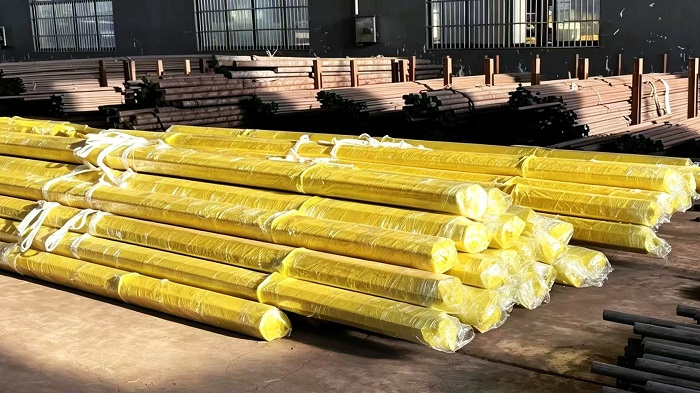
– Core Advantages of 630 Steel
1.Biocompatibility
Optimized passive-film technology limits nickel-ion leaching ≤ 0.1 μg/cm², exceeding requirements of ISO 10993 and preventing allergic reactions for implant components.
2.Intergranular-corrosion Resistance
With carbon content ≤ 0.05 %, no grain-boundary corrosion occurs after sensitization treatment at 650 ℃ per ASTM A262 Practice E intergranular-corrosion testing.
3.Hot & Cold Workability
It supports cold heading for precision screw production (30 % higher forming yield). It can also be welded for large-size reactor vessels, with weld strength ≥ 90 % of base-metal strength.
– Applications of 630 Steel in Medical-Device Manufacturing
1.630 steel delivers irreplaceable performance for minimally-invasive surgical instruments such as laparoscopes and arthroscopes:
- Precision jaw assemblies: Aged at 550 ℃ to reach HRC 35 hardness, the jaws feature gripping accuracy ≤ 5 μm to prevent tissue damage while clamping blood vessels.
- Ultra-slender instrument shafts: Puncture needle shafts under 3 mm in diameter are manufactured by cold drawing, achieving surface roughness Ra ≤ 0.2 μm to lower frictional resistance against biological tissue.
2.Implantable Medical Devices
- Joint prostheses: Femoral stems are forged from 630 steel with hydroxyapatite surface coating. Its elastic modulus of 190 GPa closely matches human bone (170 GPa), mitigating bone resorption triggered by stress-shielding effect.
- Spinal screws: Self-tapping configuration with a 15° thread angle yields insertion torque ≤ 1.5 N·m. The hardware fits patients with osteoporotic bone conditions.
- Pacemaker housings: After age-hardening at 620 ℃, the material exhibits magnetic permeability ≤ 1.005 μ₀. It eliminates interference during MRI scanning, and delivers corrosion rate ≤ 0.01 mm/year in 0.9 % sodium-chloride solution.
3.Sterilization Equipment
- Autoclave Chambers: Welded 630 steel components withstand 1000 cycles under saturated steam at 134 ℃ and 0.22 MPa without dimensional distortion. Wear loss on sealing-ring contact surfaces ≤ 0.05 mm.
- Low-temperature plasma sterilization baskets: Resistant to H₂O₂-plasma corrosion. Its surface oxide-film thickness stays stable within 5-8 nm, outperforming titanium alloy at 15 nm.
– Applications of 630 Steel in Pharmaceutical-Equipment Manufacturing
1.For active-pharmaceutical-ingredient (API) production, 630 steel addresses performance limitations exhibited by conventional 316L stainless steel under strong acid-and-alkali service conditions.
- Alternative to glass-lined reactors: A cephalosporin antibiotic production line adopts reactors fabricated from 630 steel clad plates. Exposed to mixed solution of 20 % hydrochloric acid + 10 % hydrogen peroxide, service life extends from 18 months to 5 years, eliminating product contamination caused by glass-lining spalling.
- High-pressure hydrogenation reactors: Under hydrogen atmosphere at 10 MPa and 200 ℃, fatigue crack-growth rate (da/dN) ≤ 5×10⁻⁹ mm/cycle, surpassing nickel-alloy C-276 with 8×10⁻⁹ mm/cycle.
2.Aseptic Production Systems
- Aseptic Piping and ValvesInterior surfaces are electro-polished to Ra ≤ 0.2 μm, cutting bacterial biofilm adhesion by 60 % and meeting FDA requirements for aseptic processing.
- Diaphragm valve diaphragm supports: 630-steel spring components survive 5 million open-close cycles without fatigue fracture, with leakage rate ≤ 1×10⁻⁹ mbar·L/s.
- Freeze-dryer shelves: Flatness ≤ 0.1 mm/m; temperature uniformity ± 0.5 ℃ across the -50 ℃ to +60 ℃ range, ensuring residual moisture ≤ 0.5 % for biologic products during freeze-drying cycles.
3.Intelligent Pharmaceutical Equipment
- Pharmaceutical-robot joints: Nitrided 630-steel gears reach surface hardness of HRC 50. Combined with machining precision at 0.01 mm level, drug-sorting deviation ≤ 0.1 g is achieved.
- Intelligent storage racking: Under service conditions of 25 ℃ and RH 85 %, resistance to stress-corrosion cracking exceeds 1000 h, substantially outperforming 304 stainless steel at 300 h.
– Development Outlook
Within the medical-device sector, material traceability systems cover the full workflow from melting, forging through heat treatment, delivering batch consistency up to 99.8 %. For pharmaceutical-equipment applications, 630 steel complies with ASME BPE standards. X-ray photoelectron spectroscopy (XPS) is deployed to measure passive-film thickness, enabling nano-scale precision control.
Boasting three core properties: high strength, corrosion resistance and biocompatibility, 630 steel reshapes material-selection landscapes for medical-device and pharmaceutical-equipment manufacturing. As global regulatory requirements converge, this high-performance precipitation-hardening steel will unlock greater value for precision medicine and smart pharmaceutical production, serving as a reliable material foundation for healthcare industries worldwide.


