
How Heat-Treatment Impacts Mechanical Properties
of 630 (17-4PH) Steel
630 steel (UNS S17400, 17-4PH, SUS 630, 1.4542, X5CrNiCuNb16-4, 0Cr17Ni4Cu4Nb, 05Cr15Ni5Cu4Nb) is a typical martensitic precipitation-hardening stainless steel.
Its properties can be precisely tuned via solution treatment plus age hardening. The primary strengthening mechanism relies on Cu-rich precipitates (Cu particles) and niobium carbides such as NbC formed during aging, delivering an optimal balance between strength and toughness.
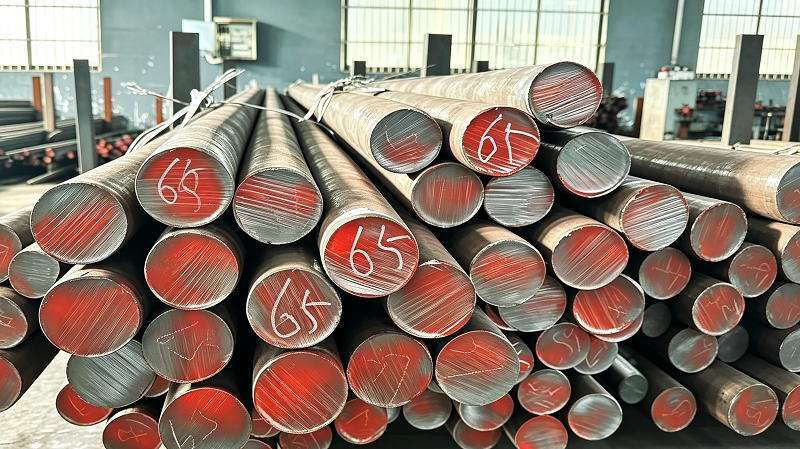
– Heat-Treatment Regimes
Heat-treatment for 630 steel consists of two stages: solution treatment and age hardening. Varying aging temperature and holding time delivers multiple strength grades, including H900, H1025, H1075 and H1150. The letter H stands for “hardening”, while the numeric value approximates the aging temperature multiplied by 10.
(一) Solution Treatment (Pretreatment)
1.Purpose
Fully dissolve alloying elements including Cr, Ni, Cu and Nb into austenite to form a homogeneous single phase microstructure, preparing for the precipitation of strengthening phases during subsequent aging.
2.Process Parameters
- Heating temperature:1020-1060 °C (1040 °C is commonly used). Excessively high temperature causes grain coarsening, while insufficient temperature leads to incomplete solution treatment.
- Holding time: Calculated based on workpiece thickness, typically 1-2 hours, with 1 hour of holding per 25 mm section thickness, to guarantee uniform temperature across the cross-section.
- Cooling method: Rapid water quenching (or oil quenching) to suppress carbide precipitation and obtain a microstructure of supersaturated martensite plus minor retained austenite.
- Microstructure evolution:Austenitization takes place during heating. Low-carbon martensite containing supersaturated Cu, Nb and other elements forms after cooling, with hardness ranging from 28-34 HRC and favorable ductility for subsequent processing.
(二) Age-Hardening Treatment (Core Strengthening Process)
1.Four typical treatment regimes
Upon heating, aging treatment triggers the precipitation of nano-scale strengthening phases out of supersaturated Cu, Nb and other alloying elements, bringing notable strength improvement.
|
Aging Grade |
Temperature /℃ | Time/h | Cooling Method | Target Properties |
Precipitated Phases |
|
H900 |
480 | 1 | Air cooling | Maximum strength(TS ≥1310 MPa) | Cu-rich nano-particles |
| H1025 | 550 | 4 | Air cooling | Balanced strength-toughness
(TS ≥1070 MPa) |
Cu particles + minor NbC |
|
H1075 |
580 | 4 | Air cooling | Moderate strength + good ductility
(TS≥1000 MPa) |
Slightly coarsened Cu particles+ NbC |
| H1150 | 620 | 4 | Air cooling | Lowest strength + maximum toughness
(TS ≥930 MPa) |
Coarse Cu particles + NbC |
2.Process Features
- H900: Low-temperature aging at 480 °C produces fine, dispersed Cu-rich precipitates. It delivers the strongest strengthening effect yet relatively low toughness, suited for high strength precision components.
- H1150: High-temperature aging at 620 °C triggers precipitate coarsening. Strength drops while toughness improves remarkably, ideal for structural parts requiring impact resistance.
- Holding time: Typically 4 hours. Excessive holding time coarsens precipitates and weakens strengthening performance; insufficient holding time leads to incomplete precipitation and inadequate strength.
– Mechanical-Property Analysis
Mechanical properties. The influence of different aging treatments on mechanical performance of 630 steel.
|
Property Index |
H900 | H1025 | H1075 | H1150 |
Solution-Treated State |
|
Tensile strength / MPa |
≥1310 | ≥1070 | ≥1000 | ≥930 |
/ |
|
Yield strength / MPa |
≥1170 | ≥1000 | ≥860 | ≥725 | / |
|
Elongation /% |
≥10 | ≥12 | ≥13 | ≥16 |
/ |
|
Hardness / HRC |
40 | 35 | 32 | 28 | 38 |
|
Impact toughness / J |
/ | 20 | 27 | 41 |
/ |
(一)Summary of Trends
- Strength and hardness decline as aging temperature rises, while elongation and impact toughness increase gradually, showing a typical strength-toughness trade-off.
- H900 delivers strength comparable to quenched-and-tempered carbon steel 45, yet features much better corrosion resistance. H1150 offers toughness close to conventional stainless steel 304, with superior strength performance.
(二)Corrosion Resistance
630 steel outperforms common martensitic stainless steels such as grade 410, and its corrosion resistance approaches that of austenitic stainless steel 304. This performance mainly comes from the passive film formed by 17 % Cr.
- Uniform-corrosion resistance: It performs well under atmospheric conditions, fresh water and neutral salt solutions. Its corrosion resistance degrades when exposed to strongly reducing media including hydrochloric acid and sulfuric acid.
- Influence of aging treatment: Fine precipitates formed under low-temperature aging (H900) create minimal impact on grain boundaries, giving slightly better intergranular-corrosion resistance compared with high-temperature aging (H1150). Long-term holding within the sensitization temperature range of 500-800 °C must be avoided. Otherwise, Cr₂₃C₆ precipitates and triggers Cr-depletion at grain boundaries.
(三)Machinability
- Hot-Working Performance:Hot-working temperature range: 900-1150 °C. It offers good high-temperature ductility for forging and rolling. Avoid prolonged heating within 400-650 °C aging-hardening range to prevent precipitate coarsening.
- Cold-Working Performance: Solution-treated material has low hardness (28-34 HRC), suitable for cold drawing and cold rolling. It shows moderate work-hardening rate. Intermediate annealing (solution treatment at 1020 °C) is required for stress relief.
- Weldability: It delivers satisfactory weldability. ER309L or ER312 filler wires are recommended. Pre-weld preheating is unnecessary; apply 100-150 °C preheating for sections over 30 mm. Post-weld aging such as H1025 is required to restore strength. Weld heat input dissolves precipitates in weld zones and causes strength loss, which should be avoided.
(四)Physical Properties
- Density: 7.78 g/cm³ (slightly lower than 7.93 g/cm³ for austenitic stainless steel).
- Thermal conductivity: Approximately 16 W/(m·K) at 20 °C, lower than carbon steel (45 W/(m·K)). Heat-dissipation design should be taken into account.
- Linear expansion coefficient: 10.6×10⁻⁶/℃ (20-100 °C). It falls between carbon steel (11.0×10⁻⁶/℃) and austenitic stainless steel (17.2×10⁻⁶/℃), making it suitable for mating with dissimilar materials.
– Conclusion
With precise solution-treatment plus aging heat treatment, 630 steel delivers tunable performance gradients ranging from high-strength H900 to high-toughness H1150. Its key process advantages are listed below:
- Wide heat-treatment window allows flexible adjustment to match application requirements.
- Outstanding comprehensive properties resolve the long-standing trade-off of conventional stainless steels: difficulty in combining high strength and high corrosion resistance.
- Good processing adaptability makes it well-suited for precision machining and welded structures.
In practical applications, select the optimal heat-treatment regime according to service conditions of workpieces, including load, corrosive environment and operating temperature. Parameters such as cooling rate and aging time shall be well controlled to prevent uneven precipitates or grain coarsening and guarantee consistent performance stability.


