
9Cr18Mo: How Alloying Tuning Boosts Wear & Corrosion Resistance
As a representative martensitic stainless steel of the high-carbon high-chromium family, 9Cr18Mo (102Cr17Mo, S45990, SUS440C, S44004, X105CrMo17, 1.4125) delivers outstanding hardness, excellent wear resistance & favourable corrosion resistance. It finds wide application in cutting tools, bearing components, valve parts and medical-device assemblies. Minor shifts within its chemical composition can exert a substantial impact on final material performance.
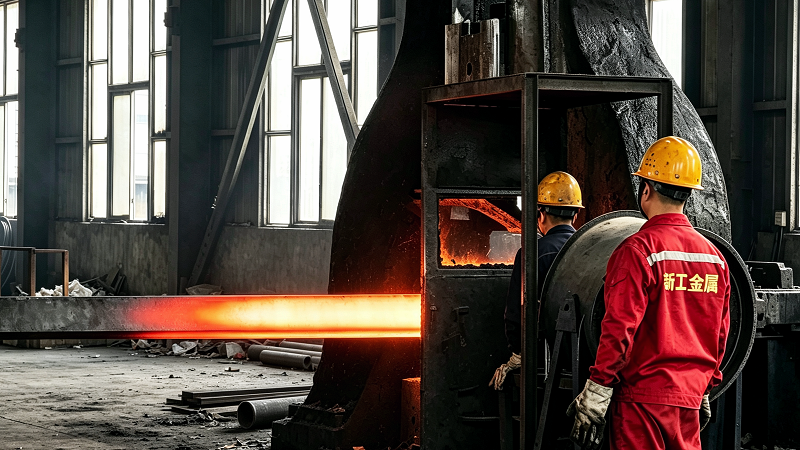
– Effects of Major Element Variation on Material Performance
1. Carbon (C): 0.95 %-1.10 %
- Hardness & Wear Resistance: Carbon acts as the key element for carbide formation, mainly Cr₂₃C₆ and Cr₇C₃. Higher carbon content markedly boosts hardness and wear resistance after quenching & tempering, forming the foundation for the steel’s high hardness.
- Toughness: Excessively high carbon reduces toughness and raises brittleness. Increased quantity, enlarged grain size or uneven distribution of carbides can serve as crack initiation sites.
- Corrosion Resistance: Carbon combines with chromium to form carbides, depleting chromium within the metal matrix. Rising carbon levels lower the effective chromium content of the matrix and weaken corrosion resistance, especially resistance to intergranular corrosion.
- Retained Austenite: High carbon raises the volume fraction of retained austenite after quenching. Excess retained austenite degrades hardness & dimensional stability; cryogenic treatment or multiple tempering cycles are required for its transformation.
2. Chromium (Cr): 16.00 %-18.00 %
- Corrosion Resistance: Chromium serves as the core element delivering stainless steel corrosion resistance by forming a dense Cr₂O₃ passive film. Within a reasonable range, higher chromium content markedly improves corrosion resistance, particularly against oxidising media such as atmospheric exposure and nitric acid. Reduced chromium levels severely degrade corrosion performance.
- Hardenability: Chromium increases steel hardenability. Martensitic microstructure can be obtained even at slower cooling rates, supporting hardening for large-section components.
- Carbide Formation: Chromium acts as a strong carbide-forming element. Higher chromium content generates larger volumes of stable chromium-rich carbides.
- Toughness: Excessively high chromium content (especially paired with high carbon) may trigger excessive, coarsened carbides with continuous precipitation along grain boundaries. This negatively impairs toughness & corrosion resistance and raises susceptibility to intergranular corrosion.
3. Molybdenum (Mo): 0.40 %-0.70 %
- Corrosion Resistance: Molybdenum greatly improves resistance to pitting & crevice corrosion, especially in chloride-containing environments such as seawater and salt spray. This is the key advantage of 9Cr18Mo over 9Cr18 (440B). Higher molybdenum levels amplify this protective effect.
- Secondary Hardening: During tempering, molybdenum forms fine alloy carbides such as Mo₂C and delivers a secondary hardening effect. It helps elevate hot hardness, tensile strength & wear resistance.
- Tempering Stability: Molybdenum raises the steel’s tempering resistance, enabling retention of high hardness and strength even after tempering at elevated temperatures.
- Hardenability: Molybdenum also delivers a modest improvement in hardenability.
- Toughness: Moderate molybdenum addition refines grains and slightly enhances toughness. Excess molybdenum, however, may promote intermetallic phases including χ phase and σ phase, which degrade toughness & corrosion resistance.
4. Manganese (Mn): ≤ 0.80 %
- Deoxidation: Acts as a primary deoxidizer during steel smelting.
- Ferrite Strengthening: Enhances tensile strength & hardness while slightly reducing material toughness.
- High-Temperature Oxidation Resistance: Improves oxidation resistance under high-temperature service conditions.
- Temper Brittleness Risk: Increases susceptibility to temper brittleness, though martensitic stainless steels are relatively immune to this defect.
- Limited Impact on Core Performance: Within standard specification limits, Mn exerts far less influence on material properties compared with C, Cr & Mo. Excess manganese content will notably increase material brittleness.
5. Silicon (Si): ≤ 0.80 %
- Deoxidation: Serves as a primary deoxidizer during smelting.
- Ferrite Strengthening: Boosts strength & hardness at the cost of reduced toughness.
- High-Temperature Oxidation Resistance: Elevates oxidation resistance at elevated temperatures.
- Temper Brittleness Risk: May raise susceptibility to temper brittleness, even though martensitic stainless steels show relative insensitivity to this issue.
- Limited Impact on Core Performance: Within specified limits, Si exerts a weaker effect on key properties than C, Cr & Mo. Excess silicon will increase brittleness.
6. Phosphorus (P) & Sulphur (S): P ≤ 0.035 %, S ≤ 0.030 % (Lower thresholds apply for premium grades, e.g. P ≤ 0.025 %, S ≤ 0.015 %)
- Harmful Impurities: Both are undesirable trace elements and should be minimised.
- Hot Brittleness (S): Sulphur forms low-melting-point FeS, triggering cracking during hot working such as rolling & forging.
- Cold Brittleness (P): Phosphorus segregates at grain boundaries and severely degrades toughness, especially low-temperature toughness, and raises susceptibility to cold brittleness.
- Inclusions: They generate non-metallic inclusions including MnS and FeP, reducing material cleanliness, toughness, fatigue strength & corrosion resistance.
– Summary & Key Balance Considerations
1.Key Property Trade-Offs for 9Cr18Mo
Carbon (C) vs Chromium (Cr) vs Corrosion Resistance: Targeting high hardness via elevated C sacrifices corrosion resistance as carbon consumes available chromium. Sufficient Cr (≥17 %) must be retained to preserve fundamental stainless-steel characteristics. High-C & high-Cr combinations demand tightly controlled heat treatment to balance competing properties.
Carbon (C) vs Toughness: High hardness inherently comes with reduced toughness. Carbon levels & heat-treatment routes must be selected according to service scenarios, for example impact-resistant cutting tools versus precision bearings.
Benefits of Molybdenum (Mo): Mo addition represents the core advantage of 9Cr18Mo. It greatly improves resistance to pitting & crevice corrosion compared to 9Cr18 / 440B and delivers secondary hardening capability. The optimal range generally sits at 0.60-0.75 %.
Cleanliness (P, S): Low phosphorus & sulphur content is critical for securing desirable toughness, fatigue strength & hot workability.
2. Critical Role of Heat Treatment
Chemical composition defines the baseline material potential, yet final properties including hardness, strength, toughness, corrosion resistance & dimensional stability rely heavily on precise heat-treatment workflows: quenching temperature, cooling rate, cryogenic treatment, plus tempering temperature and cycle count. Minor shifts in chemical makeup may require adjustments to heat-treatment parameters.
Demand for high-performance metallic materials keeps growing across global markets. A stable supply chain and robust quality system stand as core competitive factors. Sichuan Super Metal Material Co., Ltd. maintains ample stock of 9Cr18Mo stainless steel in round bars, square bars, flat bars, hexagonal bars, octagonal bars & steel plates. All products hold GB/T 19001-2016/ISO 9001:2015 and GJB 9001C-2017 weaponry quality management system certifications. Industrial clients are welcome to reach out for enquiries and partnerships. We jointly explore new pathways for manufacturing upgrades enabled by optimized alloy composition.


